
Land & Policy Support
Navigating Land Access for Farmers & Gardeners
Keep Growing Detroit believes every resident deserves a simple, fair, and transparent path to purchase and protect land. Since the passage of Detroit’s Urban Agriculture Ordinance in 2013, growers have stronger protections for using land to grow food. Still, the most reliable way to safeguard your farm is to secure ownership, protect your site, and get permitted.
We provide support at every step:
Understanding City programs and the purchase process
Supporting growers with property applications
Developing plot plans
Understanding City ordinances that relate to urban agriculture
Providing resources and tools to guide growers through the permitting process
Owning your land is the most powerful way to secure the future of your garden or farm. Land ownership gives growers long-term stability, reduces the risk of displacement, and protection of your resources. Keep Growing Detroit helps residents navigate the City’s land purchase process with clear information, step-by-step support, and connections to resources so that every grower has a fair chance to put down roots.
Quick Guide to Purchasing Land for Urban Agriculture

Step 1
-
When choosing a place for your garden there are many things to consider including
Step 2
-
Don't skip this step! Neighbors can be a gardens best advocate or worst nightmare! It will be the people living right around the garden who can provide eyes and ears on the site when you are not there. They are also in a position to complain to the city about things they don't like on your site which could result in a ticketing. The Land Bank may also reach out to them when you apply to purchase. Neighbors should be informed about what is happening and their voices should be heard. Ideally their participation is welcome in the planning and implementation of your project.

Step 3
-
The following sites are great resources to identify who owns the land currently. They will also give information like the measurements of the lot, parcel ID, zoning and last sale price.

Step 4
-
The process of applying for ownership will vary depending on who owns the site. This guide will focus on property owned by the Detroit Land Bank Authority (DLBA) as they are the primary owner of vacant land in the city. If a different entity owns your site reach out to KGD for support! The DLBA currently has 4 paths to ownership for gardeners.
Side lots - lot must be adjacent (or touching) property you own and occupy. These lots sale for $100. Enter your address at the link above to apply.
Neighborhood Lots - lot must be within 500ft of property you own and occupy. You may purchase up to 2 of these lots per year. Neighborhood lots sale for $250. Enter you address at the link above to apply.
Projects Portal - click this link to apply for lots that do not meet side lot or neighborhood lot criteria. You will need a plot plan, budget and proof of funds to apply
Marketed Properties - click this link and navigate to land based projects for properties that are being sold as bundles by the DLBA

Step 5
-
Patience is a virtue! After applying for your property and receiving a confirmation number via email (keep this!), you may need to wait up to 4-6 months for the land bank to review your materials and approve the purchase. There can be all sorts of hurdles in the way (see below).
Use your confirmation number to check on your status and check in periodically with your DLBA program manager.
Once approved, you will receive a purchase agreement to sign and be asked for a deposit for the property.
The DLBA will schedule a closing and you will pay the final amount. Please note that DLBA usually issues reconveyance deeds. This means that you will likely have a reporting schedule and need to get permitted for your site.
If you do not follow these steps the deed can be revoked!
Step 6
-
Record your deed by filing a Property Transfer Affidavit. If you purchased as a neighborhood lot or through the projects portal you will need to report to the DLBA on the progress of your garden project. Be sure to make a note in your calendar to remind you of your reporting schedule. If something in your project changes or is delayed be sure to communicate with your DLBA project manager!
Step 7
-
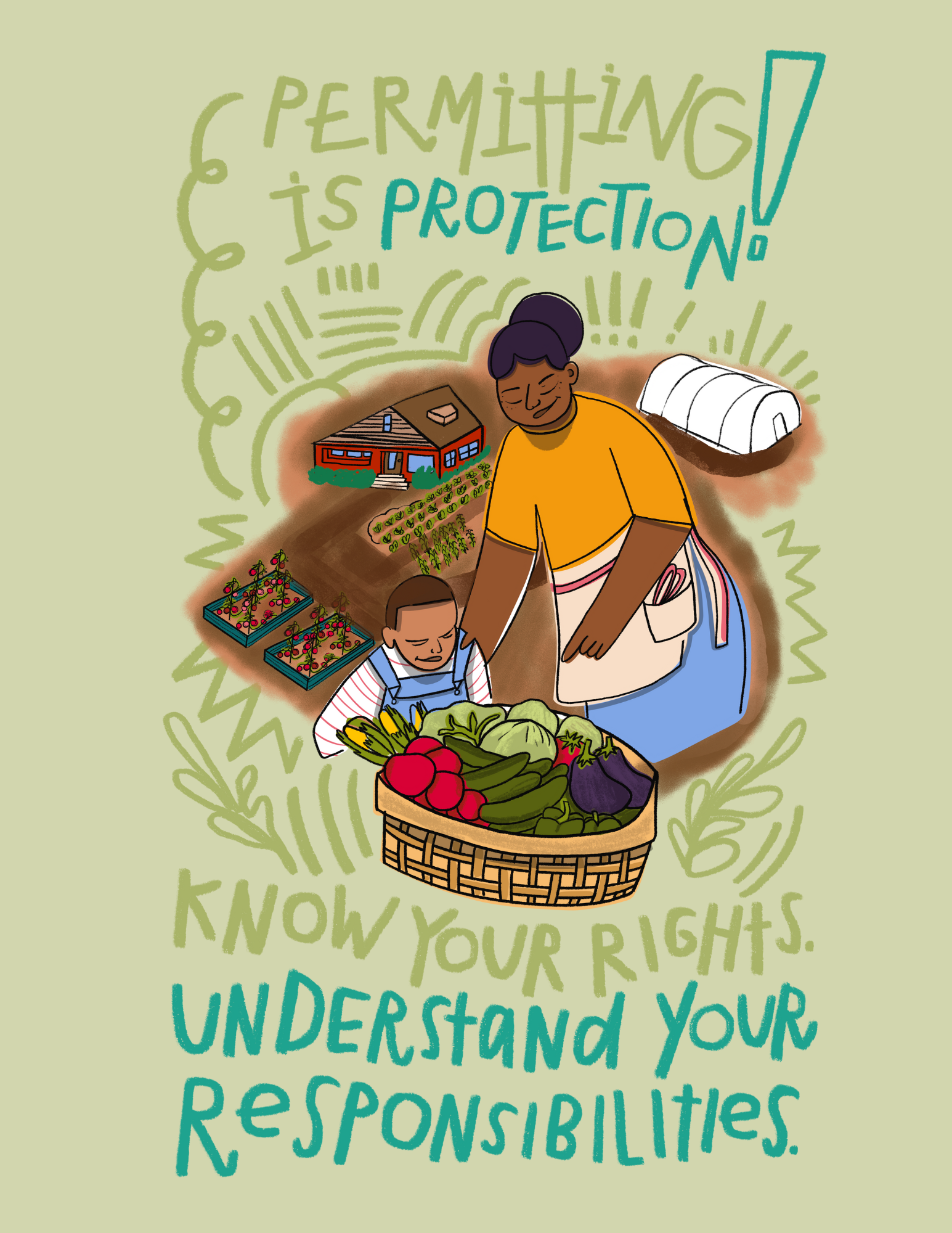
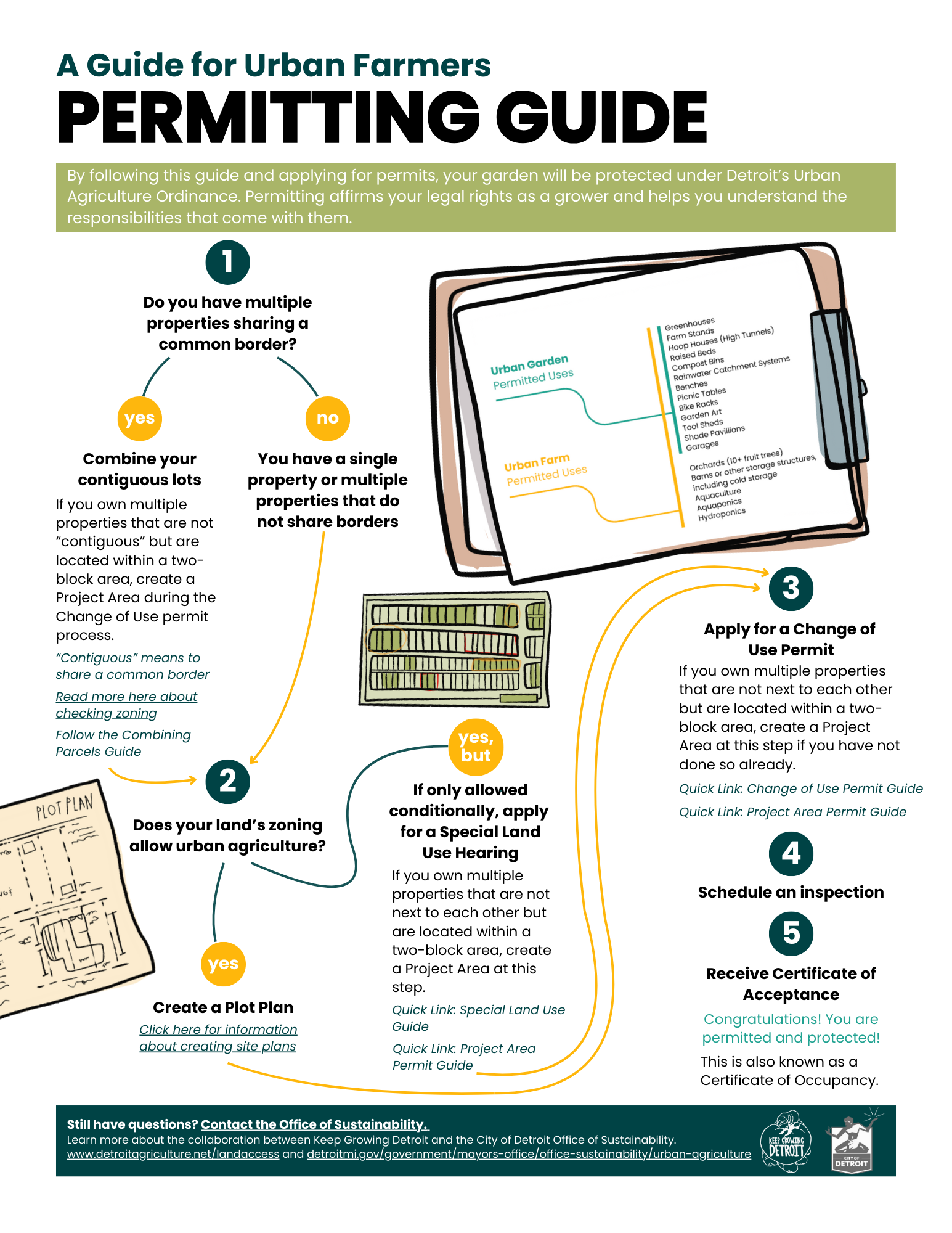
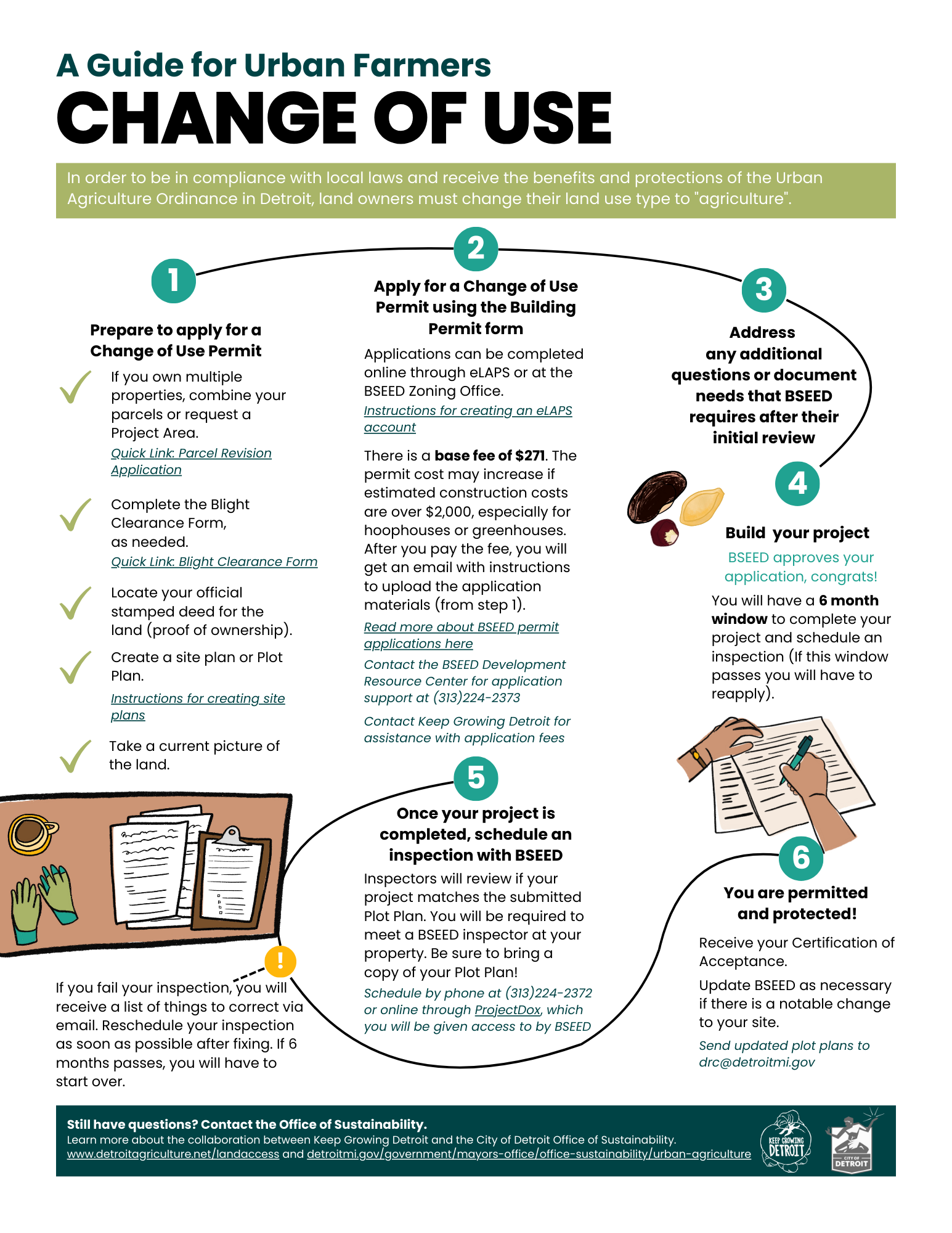
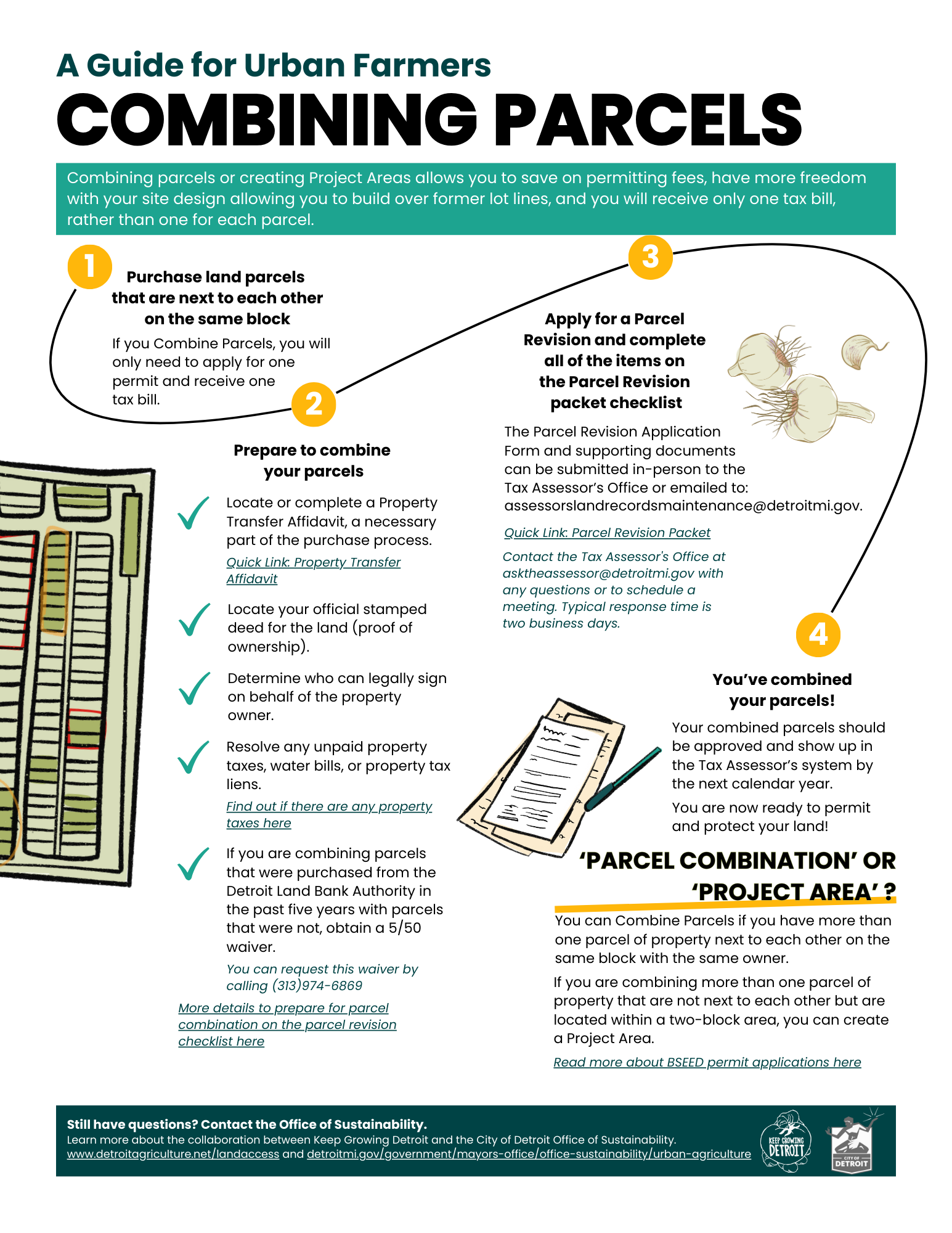
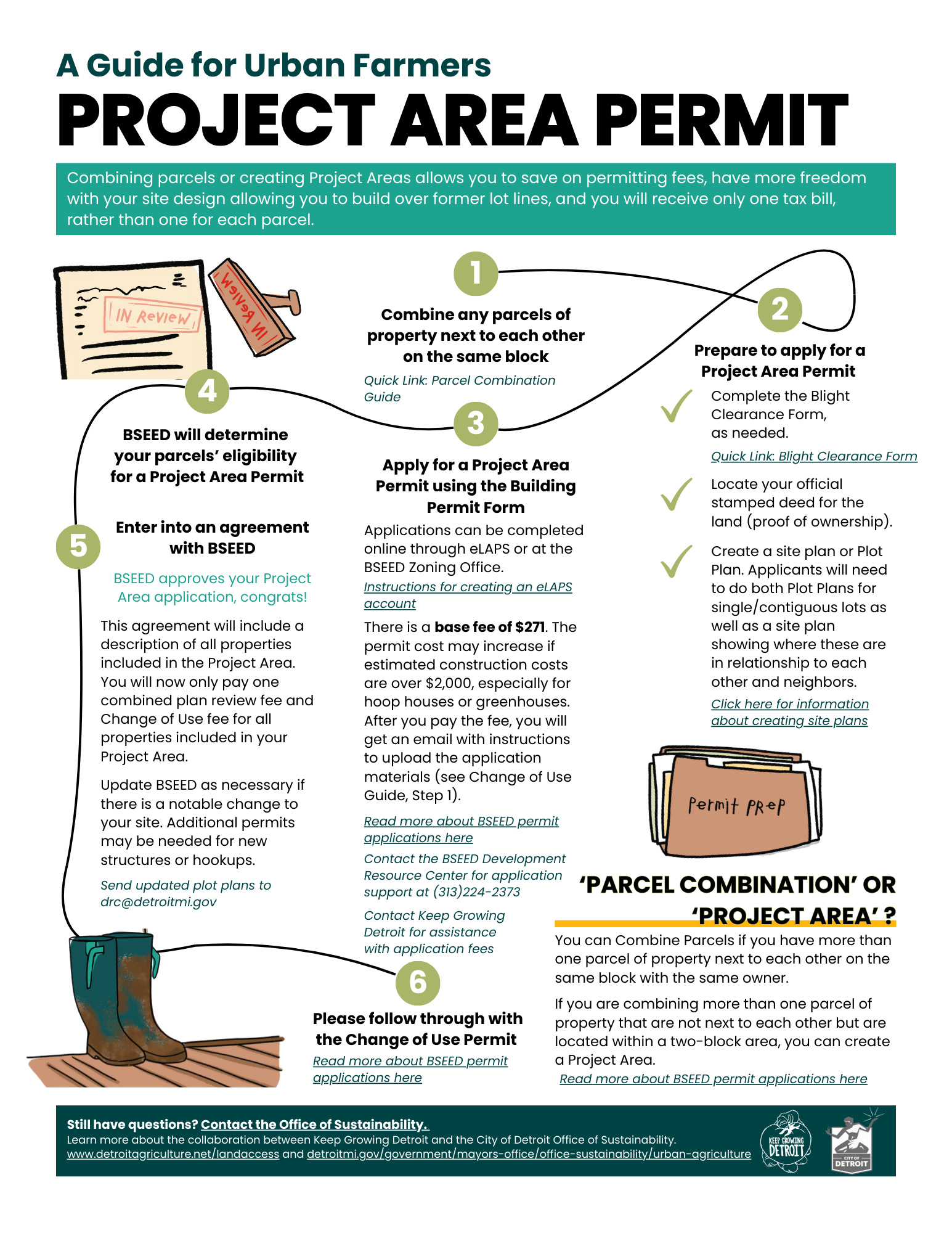
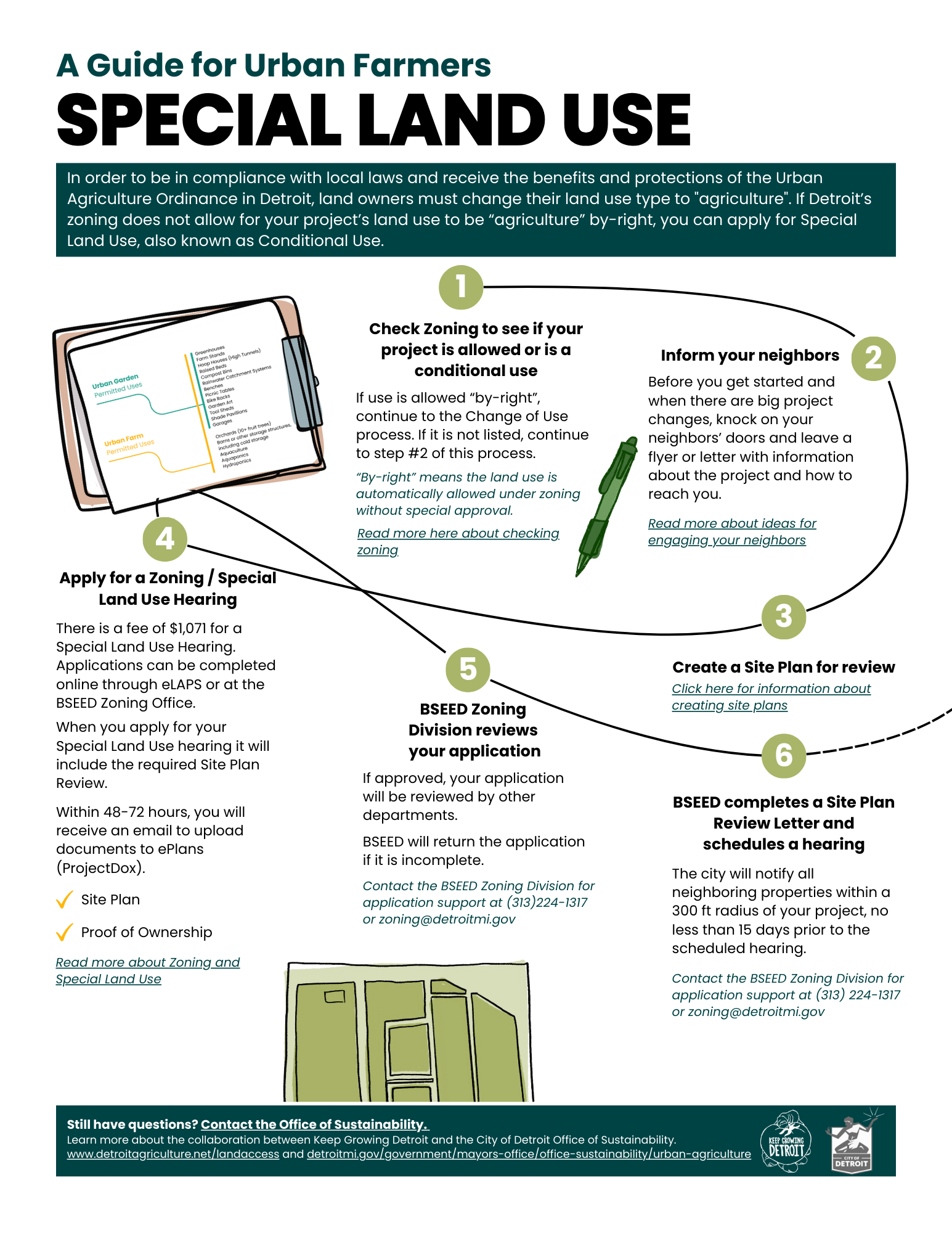
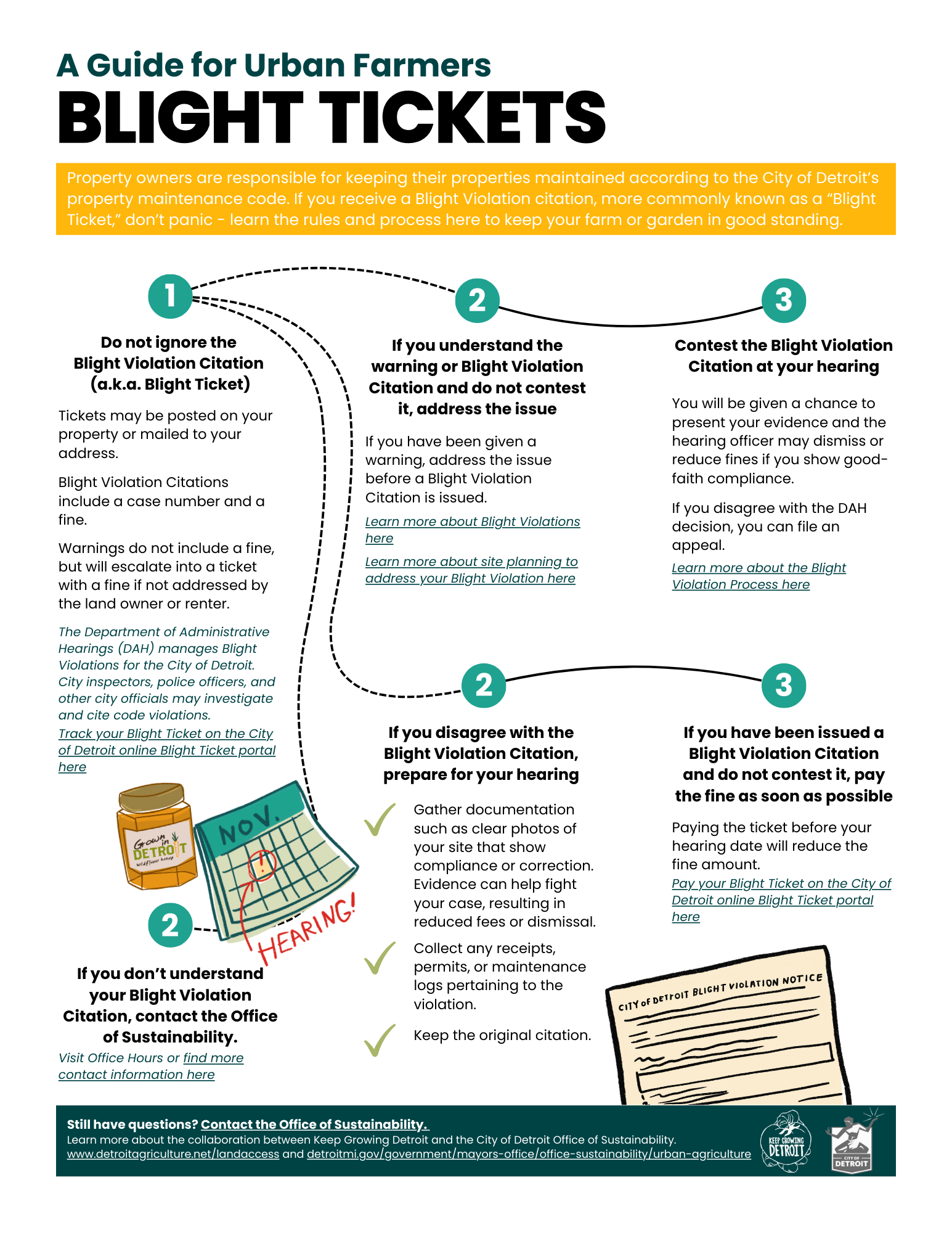
Permitting helps protect your garden or farm and clarifies your responsibilities as a landowner. It signals to the City that your space is covered under Detroit’s Urban Agriculture Ordinance, giving you additional legal rights and recognition. Check out the guides below for more detailed information for urban farmers.
Permitting is protection!
Permitting helps protect your garden or farm and clarifies your responsibilities as a landowner. It signals to the City that your space is covered under Detroit’s Urban Agriculture Ordinance, giving you additional legal rights and recognition. Check out the guides below for more detailed information for urban farmers.
Policy Library
Quick links to resources to help you get started on your garden or farm, connect with local networks, and navigate processes. The links below have additional info to help you purchase and permit land for your garden or farm.
-
The City of Detroit’s Land Based Projects enhance life in Detroit. The City recognizes the role neighborhood steward have played in preserving community through their investment into these projects over time. The City commits to enacting transparent standards that will allow these projects to thrive, and creating process that are clear, fair, and understandable.
Virtual Office Hours- First Thursday of every month (12 - 1pm)
-
Virtual Office Hours
-
The Detroit Land Bank Authority offers Detroit residents an abundance of home and land ownership opportunities. We’ve designed our sales programs to make buying properties in Detroit more accessible and affordable than ever before. This is your chance to take part.
-
The Detroit Black Farmer Land Fund is a coalition of 3 long-standing Detroit urban farming organizations with a collective mission to rebuild inter-generational land ownership for Black Farmers in Detroit. In collaboration, with Detroit Black Community Food Security Network, Oakland Avenue Urban Farm, and Keep Growing Detroit created the Detroit Black Farmer Land Fund on Juneteenth 2020.
Applications are available by Juneteenth. Find out more at www.detroiblackfarmer.com.
-
-
For many people, the purchase of a home or other real estate property is the largest monetary investment they will make in their lifetime. People will often purchase homeowners insurance in order to protect this investment; however, title insurance can be just as crucial. Title insurance financially protects you and your lender from any unknown claims or defects in the title of the property you are buying.
Read more here.
-
To ensure that your garden is productive as well as safe for growing food, we encourage you to have a soil test done. A soil test will inform you not only of any hazards in the soil, but also will provide information on the general health of your soil (pH, organic matter) and how to improve it.
Read more about soil testing here.
-
Complete the City Of Detroit Public Property Purchase Application Form. Once your Application is submitted, you can expect a call from a DLBA representative within 2-4 weeks, if DLBA owns the property.
Save your Application ID!
-
Item description
-
-
Still have questions?

Attend the City of Detroit Land Based Projects Virtual Office Hours every first Thursday of the month from 12-1p
Detroit Black Farmer
Land Fund
The Detroit Black Farmer Land Fund is a coalition of 3 long-standing Detroit urban farming organizations with a collective mission to rebuild inter-generational land ownership for Black Farmers in Detroit. In collaboration, with Detroit Black Community Food Security Network, Oakland Avenue Urban Farm, and Keep Growing Detroit created the Detroit Black Farmer Land Fund on Juneteenth 2020.
Applications are available by Juneteenth. Find out more at www.detroiblackfarmer.com